Email List Building Strategy : A Comprehensive Guide 2026
Email List Building Strategy : Email list building continues to be one of the most powerful digital marketing strategies in 2026, even with the rise of AI marketing automation, social media dominance, and short-form video content. While many platforms change algorithms frequently and reduce organic reach, email remains a direct communication channel between a brand and its audience. When you build an email list, you are building a business asset that you own and control.
Table of Contents
For online entrepreneurs, digital marketers, bloggers, affiliate marketers, ecommerce sellers, and content creators, email marketing provides stability, predictable revenue opportunities, and long-term audience relationship building. Modern email marketing is no longer about sending mass promotional emails. Instead, it focuses on personalization, behavioral targeting, automation funnels, and value-driven communication. Businesses that build high-quality email lists often generate significantly higher conversion rates compared to social media traffic.
In this comprehensive guide, you will learn advanced email list building strategies, lead magnet optimization methods, funnel building systems, segmentation frameworks, automation strategies, and future trends shaping email marketing between 2026 and 2030.
Understanding Email List Building in the Modern Digital Marketing Ecosystem

Email list building is the process of collecting email addresses from users who are interested in your content, products, or services. These users voluntarily subscribe to receive updates, offers, or valuable information from your brand. Unlike random website visitors, email subscribers are already warm leads because they have shown interest in your business.
In 2026, email marketing is deeply integrated with AI-driven personalization, predictive analytics, and automated customer journey systems. Email marketing tools now track user behavior such as email open patterns, link Taps, browsing history, and purchase activity. This allows businesses to send highly targeted and personalized emails. Email list building is now part of relationship marketing, not just lead collection.
Why Email List Building is More Important Than Ever in 2026
The digital marketing environment is becoming more competitive and unpredictable. Social media organic reach is decreasing, paid advertising costs are increasing, and audience attention spans are shrinking. Email marketing provides stability in this changing environment. When you send an email campaign, you are not competing with algorithms. You are directly reaching your audience inbox.
Also Read : Email Newsletter Publisher Business : A Comprehensive Guide 2025
Email marketing also supports multiple business models including affiliate marketing, digital product sales, course selling, ecommerce product launches, SaaS product onboarding, and service lead generation. Email marketing allows deep personalization, which increases engagement rates and customer lifetime value. Email subscribers are usually more loyal and conversion-ready compared to social followers.
Core Benefits of Building an Email List
Key Advantages of Email Marketing:
• Direct audience ownership
• Higher conversion compared to social media
• Predictable marketing channel
• Better product launch results
• Strong customer relationship building
• Long-term traffic independence
• Automation-based sales generation
• Detailed customer behavior tracking
Email marketing works for both short-term promotions and long-term brand authority building.
Step 1: Define Your Email List Building Goal Clearly
Before building an email list, you must define your business goal. Without a clear goal, list building becomes random and ineffective.
Common Email List Building Goals:
• Selling digital products
• Promoting affiliate products
• Ecommerce product launches
• Online course selling
• Coaching or consulting lead generation
• Community building
• Content distribution
• Webinar registrations
A clear goal helps you design better lead magnets and email funnels.
Step 2: Create High-Converting Lead Magnets
Lead magnets are free valuable resources offered in exchange for email signup. In 2026, generic lead magnets like “Subscribe to Newsletter” rarely convert. High-value, problem-solving lead magnets perform much better.
High-Converting Lead Magnet Types:
• Free ebooks
• Checklists
• Free mini courses
• Webinars
• Templates
• Industry reports
• Case study downloads
• Exclusive research reports
• Private community invitations
Lead magnets must solve one specific problem quickly and clearly.
Step 3: Email Signup Placement Optimization Strategy
Where you place signup forms significantly impacts conversion rates.
Best Email Signup Placement Locations:
• Homepage hero section
• Blog article middle section
• Exit intent popup
• Dedicated landing pages
• Resource download pages
• YT description lead links
Visibility plus value increases conversion rates.
Step 4: High-Converting Landing Page Strategy
Landing pages remove distractions and focus on one goal: email signup.
Landing Page Best Practice Points:
• One clear CTA
• Benefit-focused headline
• Short signup form
• Trust signals and testimonials
• Mobile responsive design
• Fast loading speed
Landing pages often convert 2–5 times higher than homepage signup forms.
Step 5: Content Marketing Driven Email List Growth
Content marketing is one of the most powerful organic email list building methods. When you provide value first, people naturally subscribe.
Content-Based Email Growth Methods:
• Blog lead magnet integration
• YT free resource offers
• Podcast bonus downloads
• Social media lead magnet linking
• Free tools or calculators
Content builds trust before asking for email signup.
Step 6: Social Media to Email Funnel Strategy

Social media should be used to push users toward email list ownership.
Effective Funnel Flow:
Social Media Content → Lead Magnet → Email Signup → Email Nurture → Product Offer
Never depend fully on social media followers.
Step 7: Email Welcome Funnel Setup
New subscribers are most engaged during the first few days after signup. A strong welcome sequence builds trust and engagement.
Basic Welcome Sequence Structure:
Email 1 – Welcome + Lead Magnet Delivery
Email 2 – Brand Story + Authority Building
Email 3 – Educational Value Content
Email 4 – Soft Product Introduction
Email 5 – Community or Content Engagement
Strong welcome sequences increase long-term open rates.
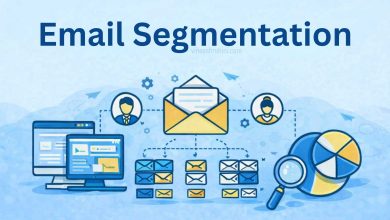
Step 8: Email List Segmentation Strategy
Segmenting email lists improves relevance and engagement.
Segmentation Categories:
• New subscribers vs long-term subscribers
• Buyers vs non-buyers
• Topic interest segments
• Engagement activity segments
• Traffic source segmentation
Buy Now : Ecommerce Website
Segmentation improves open rates and conversion rates significantly.
Step 9: Email Content Strategy Framework
Balanced email content builds trust and reduces unsubscribe rates.
Email Content Mix Strategy:
• 40% Educational emails
• 25% Storytelling emails
• 20% Case study emails
• 15% Promotional emails
Avoid sending only sales emails.
Step 10: AI Personalization and Automation Email Marketing
In 2026, AI tools help send emails at optimal times and personalize content automatically based on user behavior. Automation improves consistency and reduces manual workload.
Step 11: Email List Building Mistakes to Avoid
Common Mistakes Include:
• Buying email lists
• Sending too many sales emails
• Ignoring mobile email design
• Poor subject line optimization
• No segmentation strategy
• No automation funnel
Avoiding these mistakes protects sender reputation and engagement.
Step 12: Email List Growth Timeline Reality
Month 1–3: Foundation building
Month 3–6: Engagement optimization
Month 6–12: Revenue generation stage
Year 1+: Automation scaling stage
Email list building is a compounding growth strategy.
Step 13: Advanced Email List Growth Strategies
Advanced Methods Include:
• Quiz funnel lead generation
• Webinar funnel list building
• Paid ad lead magnet funnels
• Partnership list building campaigns
• Community driven list growth
Advanced strategies accelerate list growth.
Step 14: Email Monetization Strategies
Email lists can generate revenue through:
• Affiliate marketing promotions
• Digital product sales
• Course launches
• Consulting services
• Ecommerce product promotions
• Membership or subscription offers
Email marketing supports multiple revenue models.
Step 15: Future of Email Marketing (2026 – 2030)
Future Email Trends Include:
• AI predictive email content
• Behavior-based email automation
• Interactive email content
• Voice email integration
• Hyper-personalized email campaigns
Email marketing will become more behavior-driven and personalized.
Complete Email List Building Success Framework
Clear Lead Magnet Strategy
Consistent Traffic Generation
High-Converting Landing Pages
Strong Welcome Automation
Smart Segmentation
Value-Based Email Content
Automation Scaling Systems
Following this framework builds long-term email success.
Conclusion

Email list building remains one of the most valuable digital marketing assets in 2026. Unlike social media platforms, email lists provide direct audience connection, stable marketing communication, and high conversion potential. The most successful online businesses focus on building email communities instead of only social media audiences. Email marketing supports long-term brand building, product launch success, affiliate income generation, and business authority positioning.
Buy Now : Professional Business Website
Entrepreneurs who start building email lists early gain massive long-term advantages because email marketing compounds over time. The future of digital marketing belongs to businesses that own their audience relationships. Email list building is not just a marketing strategy. It is a long-term digital business foundation.
Disclaimer
This content is for educational and informational purposes only. Marketing results depend on strategy, industry competition, and implementation quality. This is not business or financial advice.