Marketing Automation Strategies : A Comprehensive Guide 2026
Marketing Automation Strategies : In 2026, marketing automation has evolved from a tactical efficiency tool into a strategic growth engine. Businesses no longer compete solely on product quality or pricing; they compete on speed, personalization, and customer experience. Consumers expect relevant communication, immediate responses, and seamless cross-channel engagement. Meeting these expectations manually is nearly impossible at scale. Marketing automation bridges this gap by combining behavioral data, artificial intelligence, workflow systems, and omnichannel communication into structured, intelligent customer journeys.
Table of Contents
Modern marketing automation is not about blasting automated emails. It is about designing intelligent ecosystems that respond dynamically to user behavior. It ensures that every prospect receives relevant content at precisely the right moment. When implemented correctly, automation increases lead conversion rates, enhances customer retention, improves lifetime value, reduces manual workload, and builds predictable revenue systems.
This comprehensive professional guide explores marketing automation strategies in 2026, covering foundational principles, automation architecture, AI-powered personalization, lead nurturing frameworks, ecommerce workflows, B2B automation systems, omnichannel orchestration, analytics optimization, scalability strategies, and future trends shaping the automation-driven marketing landscape.
Understanding Marketing Automation in 2026
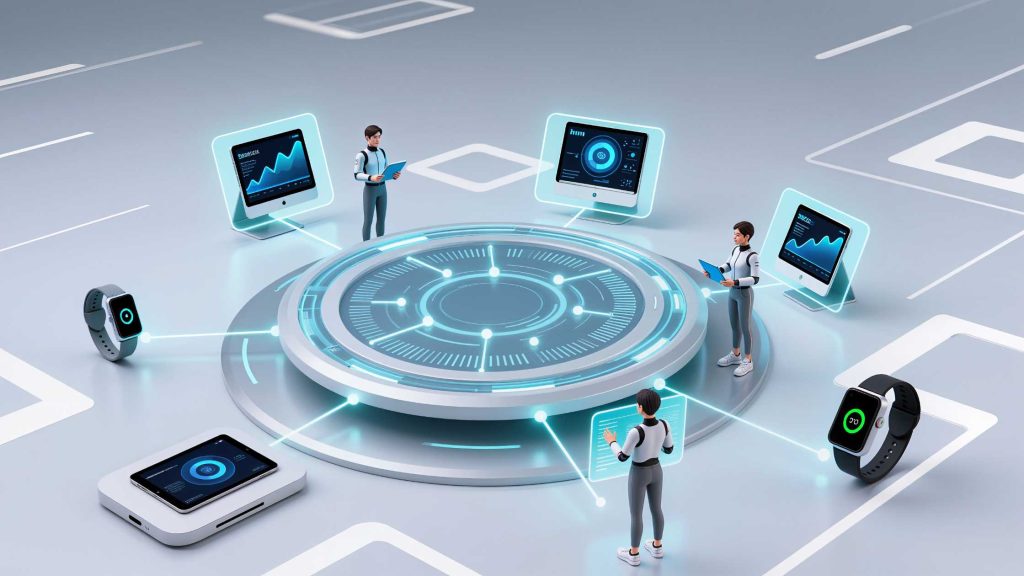
Marketing automation refers to the use of software platforms, artificial intelligence systems, and workflow triggers to automate repetitive marketing tasks while maintaining personalization and strategic alignment. These tasks include email sequences, SMS notifications, retargeting ads, lead scoring, CRM updates, push notifications, customer onboarding workflows, and performance reporting.
Unlike earlier automation systems that focused mainly on email marketing, modern platforms integrate with customer relationship management systems, ecommerce platforms, analytics tools, ad networks, and AI-driven personalization engines. Automation systems now track behavioral signals such as page visits, time spent on content, clicks, purchases, and inactivity patterns.
Also Read : Voice Search Optimization Strategy for 2026 – A Comprehensive Guide
In 2026, automation platforms operate as central command systems for digital marketing. They unify data across channels and enable businesses to create structured workflows that respond automatically to user interactions. The result is not only efficiency but strategic precision.
Why Marketing Automation Is Essential for Growth
The modern customer journey is complex and multi-touch. A potential buyer may discover a brand on social media, visit the website days later, subscribe to a newsletter, watch a YouTube video, abandon a cart, and finally make a purchase after reading reviews. Managing these interactions manually is unsustainable.
Marketing automation solves several core business challenges:
• It reduces manual follow-up workload.
• It ensures consistent communication.
• It improves lead response speed.
• It enhances personalization.
• It tracks engagement in real time.
• It aligns marketing and sales teams.
Buy Now : Ready Made Digital Store with 100 Products
Businesses that adopt automation systems experience measurable improvements in conversion rates and customer retention. More importantly, automation creates scalable systems that allow growth without proportionally increasing team size.
Building the Foundation: Automation Architecture
A successful marketing automation strategy begins with architecture design. Automation should not be implemented randomly. It requires structured planning based on the customer journey.
The foundational components include:
Lead Capture Systems: Landing pages, forms, chatbots, quizzes, and webinar registrations collect prospect data.
Segmentation Framework: Users are categorized based on demographics, behavior, interests, purchase history, and engagement level.
Trigger-Based Workflows: Automated actions activate when predefined behaviors occur.
Lead Scoring Mechanism: Prospects accumulate scores based on engagement signals, identifying sales-ready leads.
Multi-Channel Communication Integration: Email, SMS, push notifications, retargeting ads, and CRM alerts operate cohesively.
Analytics and Optimization Layer: Continuous data monitoring refines workflows.
Without architectural clarity, automation becomes chaotic rather than strategic.
Lead Nurturing Automation Strategy

Lead nurturing remains one of the most powerful applications of marketing automation. Most prospects do not convert immediately. They require education, trust-building, and consistent engagement.
A structured nurturing sequence might include:
Day 1: Welcome email introducing the brand.
Day 3: Educational content addressing common challenges.
Day 5: Case study demonstrating results.
Day 7: Social proof with testimonials.
Day 10: Soft introduction to the core offer.
Advanced systems use branching logic. If a user clicks a pricing link, they enter a high-intent sequence. If they ignore emails, they enter a re-engagement flow. This dynamic adjustment improves personalization.
Nurturing automation strengthens brand trust while guiding prospects gradually toward conversion.
Behavioral Trigger Automation
Behavioral automation responds to user actions in real time. It enhances relevance by reacting immediately to engagement signals.
Examples include:
Cart Abandonment Emails: Remind customers to complete purchases.
Page Visit Follow-Ups: Send related resources after viewing service pages.
Download Completion Sequences: Offer additional insights after resource downloads.
Inactive Subscriber Re-Engagement: Revive disengaged contacts with targeted content.
Webinar Attendance Follow-Ups: Deliver replay links and next-step offers.
Behavior-based automation increases conversion likelihood because communication aligns with demonstrated interest.
Ecommerce Marketing Automation
Ecommerce businesses benefit significantly from automation systems. Competition is intense, and margins depend on optimizing customer lifetime value.
Effective ecommerce automation workflows include:
Welcome Discount Sequences: Encourage first purchase.
Cart Abandonment Reminders: Recover lost revenue.
Post-Purchase Upsells: Recommend complementary products.
Replenishment Reminders: Encourage repeat purchases for consumables.
VIP Loyalty Programs: Reward high-value customers.
Feedback and Review Requests: Strengthen social proof.
Automation transforms one-time buyers into repeat customers, increasing profitability.
B2B Marketing Automation Framework
B2B marketing involves longer sales cycles and multiple decision-makers. Automation ensures leads are nurtured systematically until sales-ready.
Core B2B strategies include:
Lead Scoring Systems: Assign points for engagement actions.
Account-Based Marketing Workflows: Target high-value accounts with personalized sequences.
Sales Alerts: Notify sales teams when leads reach scoring thresholds.
Demo Booking Automation: Simplify scheduling.
Educational Drip Campaigns: Build authority over time.
Alignment between marketing and sales teams is critical for B2B automation success.
Omnichannel Automation Strategy
Modern consumers interact across multiple platforms. Effective automation integrates:
Email Campaigns
SMS Notifications
WhatsApp Messaging
Push Notifications
Social Media Retargeting
Website Personalization
Consistency across channels strengthens brand recall and engagement.
Omnichannel orchestration ensures the message remains cohesive regardless of entry point.
AI-Powered Personalization
Artificial intelligence has significantly enhanced marketing automation capabilities. AI systems analyze behavior patterns to predict future actions.
AI-driven features include:
Predictive Lead Scoring
Dynamic Email Subject Line Optimization
Send-Time Optimization
Churn Prediction
Personalized Product Recommendations
AI personalization improves open rates, click-through rates, and overall engagement performance.
Customer Retention Automation
Retention automation focuses on maximizing customer lifetime value. Acquiring new customers is more expensive than retaining existing ones.
Retention workflows may include:
Anniversary Emails
Loyalty Reward Notifications
Cross-Sell Campaigns
Re-Engagement Sequences
Feedback Collection Surveys
Buy Now : Digital Marketing Agency Website
Strategic retention automation builds long-term relationships.
Analytics, Testing, and Optimization
Automation must be continuously optimized. Key performance indicators include:
Open Rates
Click-Through Rates
Conversion Rates
Revenue Attribution
Customer Lifetime Value
Churn Rate
A/B testing subject lines, email copy, call-to-action placement, and workflow timing enhances performance.
Data-driven optimization ensures sustainable growth.
Common Marketing Automation Mistakes
Businesses often make errors such as:
Over-automation without personalization
Poor segmentation
Excessive email frequency
Ignoring analytics
Misalignment between marketing and salesAutomation should enhance the customer experience, not overwhelm it.
Scaling with Marketing Automation
Scaling automation involves:
Expanding segmentation layers
Integrating deeper CRM systems
Adding AI predictive capabilities
Automating upsells and renewals
Enhancing omnichannel coordination
Buy Now : Digital Marketing Agency Website
Systemized automation allows businesses to grow revenue without proportionally increasing operational workload.
The Future of Marketing Automation (2026–2030)
Emerging trends include:
AI conversational bots
Predictive customer journey mapping
Voice-activated marketing responses
Dynamic website personalization engines
Integration with augmented and virtual reality
Automation will become more intelligent, adaptive, and predictive.
Conclusion

Marketing automation in 2026 represents a strategic growth infrastructure rather than a simple software tool. Businesses that design structured automation architectures can nurture leads, convert prospects, retain customers, and scale efficiently. By integrating behavioral triggers, AI-driven personalization, omnichannel communication, and continuous optimization, companies create seamless customer journeys that operate consistently and intelligently. Automation does not replace human creativity—it enhances it by freeing marketers to focus on strategy, innovation, and customer experience. Organizations that embrace automation as a core growth engine will lead the next phase of digital transformation.
Disclaimer
This content is for educational and informational purposes only. Results depend on implementation quality, industry competition, and platform capabilities. This is not financial or business advice.
Keywords : Marketing Automation Strategies – Marketing Automation Strategies guide