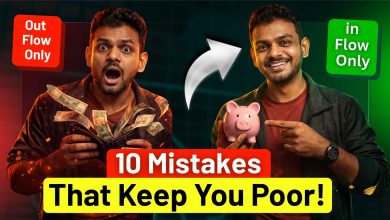
Personal Finance – Why 99% of People in Kerala Can’t Make Money? And How to Overcome It ? – Comprehensive Guide
Personal Finance : Kerala is often projected as one of the most socially advanced states in India. High literacy rate, global exposure, NRI migration history, strong healthcare system, and better quality of life make Kerala unique compared to many regions. However, behind this strong social development model lies a silent personal finance crisis. A large percentage of people earn well but fail to build long-term wealth, financial independence, or sustainable passive income systems.
Table of Contents
Many households experience a constant cycle of earning and spending without building strong financial assets. The issue is not about earning potential. The issue is about financial behavior patterns, investment awareness, asset selection strategy, and long-term wealth mindset. Personal finance success depends on how money is managed, multiplied, and protected rather than just earned. Wealth creation requires a shift from income thinking to asset thinking. Kerala’s financial ecosystem shows a strong consumption-driven structure rather than production-driven wealth generation. Understanding why this happens is critical to building a financially stronger future generation.
The Consumer State Economy – The Biggest Wealth Barrier

A major reason behind limited wealth creation is the dominance of consumption mindset. Many people operate in a financial cycle where money is earned mainly to upgrade lifestyle. High standard living has become a social expectation. Bigger houses, better vehicles, expensive weddings, branded lifestyle products, and social status spending dominate financial decisions. While these provide emotional satisfaction and social recognition, they rarely generate income.
Also Read : Moneyview Personal Loans
When income increases, expenses increase simultaneously. This prevents capital accumulation and reduces long-term investment potential. Consumption-driven financial behavior creates a dependency on continuous income generation. This means people must keep working to maintain their lifestyle. Wealth building requires shifting from consumption thinking to production thinking. Producer mindset focuses on creating income generating systems. This includes business ownership, stock market investing, digital product income, rental income, and skill monetization. Wealth creators focus on building assets first and upgrading lifestyle later. This single mindset shift can change long-term financial outcomes drastically.
The Dead Asset Trap – Emotional Assets vs Financial Assets
One of the biggest financial mistakes is over-investment in dead assets. Dead assets are assets that do not generate income or cash flow. Many people invest life savings into large residential houses. While owning a house provides emotional security and social recognition, it often acts as a financial liability. Maintenance cost, renovation cost, interior upgrades, property tax, and loan EMI create continuous expense outflow. Unless the property generates rental income or business revenue, it does not contribute to wealth creation.
Real estate becomes a wealth asset only when it generates income or appreciates significantly without draining liquidity. Similarly, excessive physical gold purchase reduces liquidity and long-term wealth growth potential. Gold protects value but does not multiply wealth aggressively. Over allocation to physical gold reduces investment capital available for high growth assets such as equity, mutual funds, business investments, or skill development.
The Lifestyle Inflation Cycle – The Silent Wealth Killer
Lifestyle inflation is a major financial trap. When income increases, lifestyle upgrades immediately follow. Better house, premium car, international travel, expensive education, and social celebrations increase financial pressure. Over time, fixed monthly expenses increase. When expenses increase, savings reduce. When savings reduce, investment reduces. When investment reduces, wealth compounding stops.
Many people unknowingly fall into a lifetime cycle of earning to sustain lifestyle rather than building financial independence. Social comparison also plays a strong role. Society often measures success based on visible assets rather than financial stability. People feel pressure to match relatives, neighbors, or social circle lifestyle. This leads to unnecessary loans, credit card debt, and EMI dependency. Financial freedom requires reverse thinking. Increase investment percentage first, then upgrade lifestyle slowly.
The Remittance Economy Effect – The Gulf Income Illusion
Kerala’s economy has been strongly supported by overseas income for decades. Gulf migration created strong cash inflow into households. While this improved living standards, it also reduced urgency for investment education. Many families used overseas income mainly for consumption, house construction, or gold purchase. Very few invested aggressively into long-term compounding assets.
When overseas income stops due to retirement, job loss, or economic slowdown, many families face financial stress because they lack passive income systems. Remittance income must be converted into income generating assets. Overseas income should be treated as wealth building opportunity rather than consumption opportunity.
The Financial Literacy Gap – The Root Cause Problem

Financial literacy remains limited despite high general education. Schools rarely teach investing, taxation, asset allocation, or wealth psychology. Many people learn finance only after making costly financial mistakes. Fear of stock market volatility prevents many from starting investing early. Many people confuse trading with investing.
Trading is short term and high risk. Investing is long term and compounding based. Without financial education, people depend on traditional savings methods like bank deposits or gold purchase. While these are safe, they rarely create strong wealth multiplication.
Why Only a Small Percentage Creates Real Wealth
The top wealth creators follow disciplined financial systems. They invest consistently through SIP, equity investments, and business expansion. They focus on scalable income models. They understand compounding. They build multiple income streams.
They focus on high value skills that increase income potential. They focus on global income opportunities like digital services, remote work, freelancing, and exports. Wealth creators think long term. They are comfortable with calculated financial risk. They focus on asset accumulation rather than consumption display.
The Psychological Money Blocks That Stop Wealth Growth
Risk avoidance mindset is a major barrier. Many people avoid investment risk but unknowingly accept inflation risk. Money sitting idle loses value over time. Short term thinking also affects wealth growth. Many people exit investments early due to market fear.
Wealth building requires patience, discipline, and emotional control. Financial success is more about behavior psychology than mathematical knowledge.
How to Overcome – The Wealth Creation Roadmap
Shift From Consumer Mindset to Creator Mindset
Focus on building income generating assets first. Lifestyle upgrades should come after investment growth.
Follow Strong Investment Allocation Strategy
Allocate income into diversified assets. Equity for growth. Debt for stability. Gold for protection. Real estate for income generation.
Start SIP Investing Early
Consistency creates compounding power. Time in market matters more than timing the market.
Build Multiple Income Streams
Salary income alone rarely creates wealth. Add digital income, skill income, investment income, and business income.
Invest in High Income Skills
Coding, digital marketing, AI tools, data analytics, automation, and consulting create strong income growth.
Control Lifestyle Inflation
Increase investment percentage when income increases. Avoid immediate lifestyle upgrades.
Convert Remittance Income into Assets
Overseas income should be used to build investment portfolio and business assets.
Personal Finance – The Future of Wealth Creation in Kerala

The next decade will reward people who adapt to digital economy, global skill income, smart investing, and disciplined financial planning. Kerala has massive potential for wealth growth because of education level and global exposure. The only missing link is structured financial behavior and long-term investment culture. Wealth is not built by income alone.
Buy Now : Beginner to Advanced Option Trading Strategy
Wealth is built by asset ownership, investment discipline, and financial intelligence. People who shift from consumption thinking to asset thinking will dominate financially in the future. Financial freedom is achievable for anyone who follows disciplined financial systems, continuous learning, and smart asset allocation strategy.