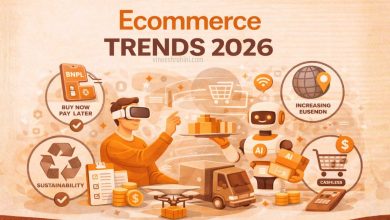
The Future of E-Commerce in 2025 : A Comprehensive Guide
The Future of E-Commerce : The world of e-commerce has entered an era of accelerated transformation. What began as a convenient alternative to physical retail has evolved into the backbone of global trade. As we move through 2025, online commerce is no longer an emerging opportunity — it is the default mode of business. The intersection of artificial intelligence, mobile technology, blockchain innovation, and changing consumer behavior is redefining how businesses sell and how people buy.
Table of Contents
For entrepreneurs, retailers, and global brands alike, understanding where e-commerce is heading is essential. The future is not about who can sell online — it’s about who can adapt quickly, personalize intelligently, and deliver efficiently. In this comprehensive guide, we explore the evolving landscape of e-commerce in 2025, emerging trends, new technologies, and the critical strategies that online sellers must adopt to thrive in the years ahead.
E-Commerce in Transition: The Digital Decade

The global retail landscape has shifted more dramatically in the past five years than in the previous two decades combined. The COVID-19 pandemic catalyzed digital adoption, and consumers across demographics turned to online channels for everything — from groceries and fashion to education and luxury goods. As of 2025, more than one-fourth of total global retail transactions occur online, generating trillions of dollars in annual revenue.
However, this evolution comes with intensified competition and rising customer expectations. Today’s consumer demands frictionless experiences — personalized recommendations, instant delivery, transparent sustainability practices, and 24/7 support. Sellers who rely solely on traditional web stores are losing ground to data-driven, experience-centric platforms that integrate mobile, social, and AI technologies seamlessly.
1. The Artificial Intelligence Revolution in Retail
Artificial Intelligence (AI) is the single most influential technology shaping e-commerce in 2025. What once seemed futuristic — predictive analytics, automated customer service, and machine-learning-based recommendations — is now standard practice.
AI algorithms analyze millions of data points in real time to anticipate buyer behavior, refine pricing strategies, and recommend products based on individual preferences. Machine learning systems identify cross-sell and upsell opportunities, helping sellers increase their average order value while minimizing customer acquisition costs.
Also Read : Top 3 Online Business Ideas in 2025 – Complete Guide for Modern Entrepreneurs
Chatbots powered by natural language processing (NLP) manage inquiries and complaints instantly, providing personalized experiences 24 hours a day. On the back end, AI streamlines inventory management, forecasting demand fluctuations with high accuracy. This reduces waste, prevents stockouts, and improves supply-chain efficiency.
In marketing, AI tools such as Meta’s Advantage+ and G’s Performance Max are optimizing ad spend automatically. These systems interpret behavioral signals better than humans, improving conversion rates and reducing cost per acquisition (CPA).
Bottom line: Sellers embracing AI are operating smarter, faster, and leaner — creating hyper-personalized customer journeys that translate directly into higher sales.
2. Voice Commerce and Visual Search: A New Frontier of Discovery

As voice-enabled devices and visual recognition technologies mature, online shopping is becoming more intuitive and hands-free. Consumers now use smart assistants like Alexa, G Assistant, and Siri to order products through spoken commands. Voice commerce sales are projected to exceed $40 billion globally in 2025.
Meanwhile, visual search allows users to upload an image or screenshot and instantly find similar products online. Platforms such as Pinterest Lens and G Lens are making product discovery more visual than textual. For sellers, this requires high-quality photography, rich metadata, and SEO-optimized image tagging.
The future of search is multimodal — combining voice, text, and visuals. Sellers optimizing for these formats will capture traffic from consumers who prefer convenience and instant recognition.
3. Sustainability and Ethical Retail: The Conscious Commerce Movement
Sustainability has moved from a niche concern to a central buying criterion. The modern consumer expects transparency across the entire product lifecycle — from sourcing materials to packaging and shipping.
Eco-friendly packaging, carbon-neutral delivery, and ethical sourcing have become differentiators. Platforms such as Shopify’s Sustainability Fund and Amazon’s Climate Pledge-Friendly initiative enable sellers to certify and communicate their eco-efforts to customers.
Brands that ignore sustainability risk losing relevance among Gen Z and millennial shoppers, who prioritize values alongside value. Sustainable logistics, recycling programs, and circular economy models are defining how successful brands operate in 2025.
4. The Dominance of Social and Community Commerce
Social media has evolved into a complete commerce ecosystem. Insta, FB, and Pinterest no longer merely advertise products; they sell them directly. In-app shopping, live product demos, and influencer-led campaigns drive billions in sales annually.
Social commerce thrives on authenticity. Consumers trust peer recommendations and influencer endorsements more than traditional advertising. Brands use user-generated content (UGC) to showcase real-life experiences, transforming customers into ambassadors.
Short-form video content reigns supreme. Live shopping sessions — where creators demonstrate products in real time — generate impulse purchases and deepen emotional connections. Businesses leveraging “shoppertainment” are seeing engagement levels once thought impossible.
5. Mobile Commerce and the App Economy
Mobile commerce (m-commerce) continues to dominate global transactions, accounting for over 70 percent of online purchases. Consumers shop on-the-go, expecting responsive design, one-click payments, and lightning-fast load times.
Progressive web apps (PWAs) and native apps are enhancing mobile experiences. Features such as push notifications, biometric logins, and voice-activated navigation reduce friction and improve retention.
Mobile payments via digital wallets like Apple Pay, G Pay, and UPI are now standard. The key for sellers is optimizing every stage of the mobile customer journey — from discovery to checkout — ensuring security and simplicity.
6. Augmented and Virtual Reality: Experiential Retail Takes Center Stage

Augmented Reality (AR) and Virtual Reality (VR) are redefining the online shopping experience. Instead of static product images, customers now interact with digital 3D models, virtually “try on” apparel, or visualize how furniture fits in their home.
Retailers like IKEA, Sephora, and Nike pioneered AR integration; by 2025, affordable plugins allow small businesses to offer similar experiences. AR not only enhances engagement but also significantly reduces return rates, a long-standing challenge for online sellers.
VR-powered virtual stores and showrooms are expanding brand storytelling into immersive environments where shoppers can explore collections and interact with AI sales assistants.
7. Cross-Border E-Commerce and Global Market Access
E-commerce has broken geographical barriers. Sellers in India can effortlessly reach buyers in Europe, the U.S., or Africa thanks to robust payment gateways, international logistics networks, and multilingual marketing tools.
Platforms such as Amazon Global, Shopify Markets, and Alibaba have simplified cross-border transactions, integrating automated tax compliance and currency conversion.
Localization is crucial — content, customer support, and even product presentation must adapt to regional preferences. Brands that invest in cultural nuance and localized SEO will dominate in global marketplaces.
8. Data Privacy, Cybersecurity, and Trust

As online transactions multiply, data protection has become the cornerstone of digital trust. Governments worldwide have tightened privacy regulations, and customers demand transparency about how their information is collected and used.
Compliance with laws such as the GDPR (Europe), CCPA (California), and India’s DPDP Act is non-negotiable. Sellers must employ encrypted payment systems, clear privacy policies, and multi-factor authentication to prevent breaches.
Investing in cybersecurity not only prevents losses but enhances brand credibility. In an age where consumers equate privacy with respect, trust is a decisive competitive advantage.
9. Automation, Robotics, and Smart Logistics
E-commerce success relies on efficient fulfillment. Automation technologies are transforming logistics operations across the supply chain. Smart warehouses equipped with AI-driven robots now handle sorting, packaging, and dispatching with precision.
IoT-enabled systems track shipments in real time, providing transparency for both seller and buyer. Drone deliveries and autonomous vehicles are gradually entering mainstream adoption, reducing last-mile delivery times dramatically.
Third-party logistics (3PL) providers are increasingly integrated into e-commerce platforms, allowing automatic order routing and real-time inventory visibility. Sustainability initiatives — such as electric delivery fleets and biodegradable packaging — are enhancing eco-efficiency while cutting costs.
10. Customer Experience: The Core of E-Commerce Success
Customer experience (CX) has become the ultimate differentiator. In 2025, technology and empathy coexist to create seamless, personalized interactions across every touchpoint.
AI-driven personalization delivers tailored product recommendations, customized homepages, and dynamic pricing. Chatbots and voice assistants provide instant help, while real-time analytics track satisfaction metrics.
Post-purchase engagement is equally critical. Automated review requests, loyalty rewards, and targeted remarketing build repeat sales. Sellers who turn transactions into relationships see higher lifetime value per customer and lower churn rates.
11. Payment Innovations: Cryptocurrency and BNPL
The way consumers pay is evolving rapidly. Cryptocurrency, once a niche, is becoming an accepted medium for online transactions. Secure blockchain-based gateways such as BitPay and Coinbase Commerce are helping merchants accept Bitcoin, Ethereum, and stablecoins with minimal processing fees.
Meanwhile, “Buy Now, Pay Later” (BNPL) services like Klarna, Affirm, and Razorpay Postpay continue to expand, offering customers flexible installment options without credit cards. This accessibility boosts conversion rates and average basket size, especially among younger shoppers.
Offering multiple, region-specific payment options is no longer optional; it is expected. Sellers integrating diverse gateways attract broader audiences and minimize cart abandonment.
12. Marketing in 2025: From Campaigns to Experiences

Digital marketing has transitioned from intrusive advertising to immersive storytelling. In 2025, success depends on authenticity, creativity, and value creation.
Artificial intelligence assists marketers in crafting hyper-personalized campaigns that adjust in real time. Interactive ads, AR-powered product previews, and gamified promotions deliver memorable experiences that drive emotional engagement.
Search Engine Optimization (SEO) remains fundamental, but zero-click search and voice optimization are changing tactics. Content must now answer questions conversationally and appear across multiple platforms.
Influencer collaborations, brand partnerships, and community-driven content are the new engines of trust. The marketing funnel has flattened; engagement and experience now lead directly to conversion.
13. Data-Driven Decision-Making: Analytics as the North Star
Data is the lifeblood of modern e-commerce. Sellers leveraging analytics make smarter, faster, and more profitable decisions.
Advanced dashboards integrate sales, traffic, engagement, and customer-behavior metrics into unified insights. Predictive analytics forecast demand and highlight emerging trends. Machine learning identifies patterns invisible to human analysis, allowing proactive strategy shifts.
Buy Now : Ready Made Digital Store with 100 Products
Data visualization tools simplify complex metrics into actionable reports, empowering teams to respond instantly to changing conditions. The era of guesswork is over; success in 2025 belongs to data-driven operators.
14. The Metaverse and the Next Digital Shopping Revolution
While still maturing, the metaverse is reshaping digital interaction. Virtual storefronts, immersive shopping malls, and NFT-linked loyalty programs are redefining how consumers connect with brands.
Forward-thinking retailers are experimenting with 3D environments where customers can browse, try on, and purchase digital or physical goods. These experiences merge gaming, entertainment, and commerce, appealing especially to Gen Z.
As VR hardware becomes mainstream, metaverse commerce is expected to create new monetization channels, blending digital ownership with real-world transactions.
15. The Road Ahead: Challenges and Opportunities
Despite its vast potential, e-commerce faces ongoing challenges: data privacy risks, supply-chain disruptions, rising advertising costs, and the need for continuous technological upgrades. However, every challenge also presents opportunity.
Businesses that invest in sustainable infrastructure, customer-centric innovation, and agile adaptation will lead the next wave of digital commerce. The winners in 2025 and beyond will be those who balance technology with transparency, automation with authenticity, and data with empathy.
Conclusion

The future of e-commerce in 2025 is defined by speed, personalization, sustainability, and trust. The integration of artificial intelligence, augmented reality, voice technology, and global logistics has created a retail environment where convenience meets experience.
For online sellers, success requires agility — adopting new technologies early, analyzing customer behavior continuously, and maintaining authenticity in every interaction. The evolution of e-commerce is not slowing down; it is accelerating into an era where physical and digital worlds coexist seamlessly.
Businesses that embrace this change with strategic foresight will not only survive but lead the digital economy of tomorrow.
Disclaimer: This article is for informational purposes only. Market trends and insights may vary; readers should research or seek professional advice before making business decisions.
Keywords : The Future of E-Commerce – The Future of E-Commerce in 2025