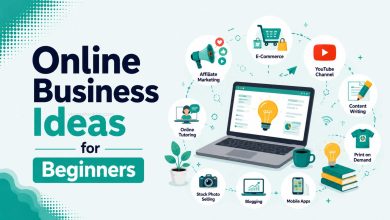
How to Validate an Online Business Idea Before You Launch : Comprehensive Guide 2026
How to Validate an Online Business Idea : Every successful online business begins with an idea. However, not every business idea becomes a profitable business. One of the biggest reasons startups fail is not because of poor marketing, lack of funding, or strong competition—it is because they build products or services that customers simply do not want. Many entrepreneurs spend months developing websites, creating products, investing in branding, and launching marketing campaigns without first confirming that there is real demand for their idea. This costly mistake can lead to wasted time, money, and motivation.
Table of Contents
In 2026, validating an online business idea before launching has become one of the most important steps in entrepreneurship. Validation is the process of testing whether a business idea solves a real customer problem and whether people are willing to pay for that solution. Instead of relying on assumptions, entrepreneurs collect real-world evidence through research, customer feedback, market analysis, and small-scale testing before making significant investments.
The digital economy has made validation easier than ever before. Entrepreneurs can use search engines, social media, online communities, surveys, crowdfunding platforms, landing pages, pre-orders, email campaigns, and analytics tools to understand customer demand before building a complete business. These low-cost validation methods reduce risk while providing valuable insights into customer behavior and market opportunities.
Artificial Intelligence (AI) has further transformed business validation by helping entrepreneurs analyze search trends, identify profitable niches, study competitors, generate customer personas, predict market demand, automate surveys, summarize customer feedback, and uncover emerging opportunities. AI-powered tools allow founders to make informed decisions based on data rather than intuition alone.
Customer behavior has also evolved. Modern consumers expect products and services that solve specific problems efficiently. Generic solutions often struggle to compete against specialized businesses that deeply understand their target audiences. Validation helps entrepreneurs identify these unmet needs before investing resources into product development.
Validation is equally valuable for every type of online business. Whether launching an ecommerce store, SaaS platform, online course, coaching service, digital product, affiliate website, subscription business, mobile application, or freelance agency, understanding customer demand significantly increases the likelihood of long-term success.
Importantly, validation is not about proving that an idea is perfect. Instead, it is about learning quickly, adapting based on customer feedback, and improving the concept before a full-scale launch. Many highly successful businesses evolved considerably from their original ideas because founders listened carefully to potential customers during the validation process.
This comprehensive guide explores every aspect of validating an online business idea in 2026, including market research, Artificial Intelligence, customer interviews, competitor analysis, minimum viable products (MVPs), pricing validation, demand testing, common mistakes, and future trends shaping successful digital entrepreneurship.
What Is Business Idea Validation?

Business idea validation is the process of confirming that an idea solves a genuine customer problem before investing significant time or money.
Instead of assuming customers will buy a product, entrepreneurs gather evidence.
Validation answers questions such as:
- Is there real demand?
- Who are the customers?
- Will customers pay?
- What problems are being solved?
- How competitive is the market?
Validation reduces uncertainty.
Data replaces assumptions.
Why Validation Matters
Many businesses fail because founders create products based on personal opinions rather than customer needs.
Also Read : Ecommerce for Rural Markets
Validation helps entrepreneurs:
- Reduce financial risk
- Understand customer expectations
- Improve product quality
- Refine business models
- Increase launch confidence
Testing ideas early saves valuable resources.
Learning before launching improves long-term success.
Start With a Real Problem
Successful businesses solve meaningful problems.
Ask yourself:
- What challenge does my product solve?
- Who experiences this problem?
- How serious is the problem?
- How are people solving it today?
Customers purchase solutions—not ideas.
Problem-focused businesses attract stronger demand.
Understanding pain points creates better products.
Identify Your Target Audience

Every business serves a specific group of people.
Define your ideal customer by considering:
- Age
- Occupation
- Income level
- Interests
- Goals
- Daily challenges
Specific audiences make validation more accurate.
Understanding customers improves every business decision.
Artificial Intelligence for Market Validation
Artificial Intelligence simplifies research significantly.
AI tools help entrepreneurs:
- Analyze search trends
- Study customer behavior
- Generate customer personas
- Summarize survey responses
- Identify market opportunities
- Monitor competitors
Machine Learning discovers patterns humans often overlook.
AI speeds up decision-making.
Technology reduces research time.
Conduct Market Research
Thorough research reveals whether demand already exists.
Study:
- Industry reports
- Search trends
- Customer reviews
- Online discussions
- Social media conversations
Understanding the market reduces uncertainty.
Knowledge creates competitive advantages.
Research supports better planning.
Analyze Your Competitors
Competitors provide valuable information.
Evaluate:
- Pricing
- Customer reviews
- Marketing strategies
- Product features
- Strengths
- Weaknesses
Competition confirms market demand.
Learning from others improves your business strategy.
Differentiation becomes easier.
Talk to Potential Customers
One of the most valuable validation methods is direct conversation.
Ask potential customers:
- What challenges do you face?
- What solutions have you tried?
- What frustrates you most?
- Would you pay for a better solution?
Customer interviews often reveal unexpected insights.
Listening improves product development.
Real feedback is more valuable than assumptions.
Create Customer Surveys

Online surveys help collect structured feedback.
Questions should explore:
- Customer needs
- Budget expectations
- Buying behavior
- Preferred features
Keep surveys short and focused.
Quality responses provide valuable guidance.
Data supports smarter decisions.
Build a Landing Page
A simple landing page allows entrepreneurs to measure real interest.
Include:
- Product description
- Benefits
- Call-to-action
- Email signup
Website visitors indicate market demand.
Email subscriptions measure customer interest.
Landing pages provide inexpensive validation.
Test With a Minimum Viable Product (MVP)
An MVP is a simplified version of the final product.
Instead of building every feature, launch only the essentials.
Examples include:
- Basic software
- Short online course
- Limited product collection
- Prototype
Customer feedback improves future development.
Testing reduces financial risk.
Iteration strengthens products.
Validate Pricing
Customers may like a product without being willing to pay for it.
Test different pricing strategies.
Observe:
- Conversion rates
- Customer feedback
- Purchase behavior
Value matters more than low pricing.
Pricing should reflect customer outcomes.
Validation includes willingness to pay.
Build an Email List

Email subscribers demonstrate genuine interest.
Offer:
- Free guides
- Checklists
- Templates
- Early access
Subscribers become valuable validation data.
Email marketing supports future launches.
Audience building begins before product creation.
Test Content Marketing
Educational content helps validate interest.
Publish:
- Blog posts
- Videos
- Social media content
- Newsletters
Measure:
- Views
- Comments
- Shares
- Questions
Engagement reveals customer curiosity.
Content validates market demand.
Measure Customer Interest
Useful metrics include:
- Website visits
- Email signups
- Survey responses
- Pre-orders
- Waiting lists
- Social engagement
Numbers provide objective evidence.
Data improves decision-making.
Validation becomes measurable.
Common Validation Mistakes

Entrepreneurs often fail because they:
- Build before researching
- Ignore customer feedback
- Validate with friends only
- Skip competitor analysis
- Assume demand exists
- Focus on features instead of problems
Validation requires honesty.
Evidence should guide decisions.
Future Trends
Several innovations will improve validation.
Artificial Intelligence
Smarter market analysis.
Predictive Analytics
Demand forecasting.
Customer Behavior Modeling
AI-driven insights.
Automated Surveys
Faster feedback collection.
Real-Time Market Intelligence
Continuous opportunity monitoring.
Technology continues improving entrepreneurship.
Best Practices
Successful entrepreneurs should:
- Solve meaningful customer problems.
- Conduct thorough market research.
- Leverage Artificial Intelligence.
- Interview potential customers.
- Build landing pages.
- Test pricing early.
- Launch minimum viable products.
- Analyze competitors.
- Measure customer engagement.
- Improve continuously based on feedback.
Validation should become an ongoing business habit.
How to Validate an Online Business Idea – Conclusion

Validating an online business idea before launching is one of the smartest investments an entrepreneur can make. Rather than relying on assumptions or personal enthusiasm alone, successful founders gather evidence that customers genuinely need their solution and are willing to pay for it. This disciplined approach significantly reduces business risk while increasing the likelihood of long-term success.
Artificial Intelligence has transformed business validation by making market research faster, more accurate, and more accessible. AI-powered tools analyze search trends, customer behavior, competitor activity, pricing patterns, and emerging opportunities, allowing entrepreneurs to make informed decisions based on data rather than guesswork. These technologies save time while improving the quality of business planning.
Buy Now : Ready Made Digital Store with 100 Products
Effective validation extends beyond market research. Customer interviews, surveys, landing pages, minimum viable products, content marketing, email list building, and pricing experiments all provide valuable insights into customer expectations and purchasing behavior. Every interaction helps entrepreneurs refine their products before making significant investments in development and marketing.
Entrepreneurs should also recognize that validation is not a one-time activity. Customer needs evolve, industries change, technology advances, and competition increases. Businesses that continuously collect feedback, monitor market conditions, and improve their offerings remain more competitive than those relying solely on initial assumptions.
Looking ahead, Artificial Intelligence, predictive analytics, behavioral modeling, automated research platforms, and real-time market intelligence will continue reshaping how entrepreneurs validate business ideas. Founders who embrace these innovations while maintaining close relationships with their customers will identify profitable opportunities more quickly and adapt successfully to changing markets.
Ultimately, validating an online business idea is not about avoiding failure—it is about learning before investing. Entrepreneurs who take the time to understand customer problems, confirm market demand, and refine their solutions build stronger businesses, launch with greater confidence, and create products that genuinely improve customers’ lives. That foundation is what drives sustainable business growth throughout 2026 and beyond.
Keywords : How to Validate an Online Business Idea – How to Validate an Online Business Idea 2026