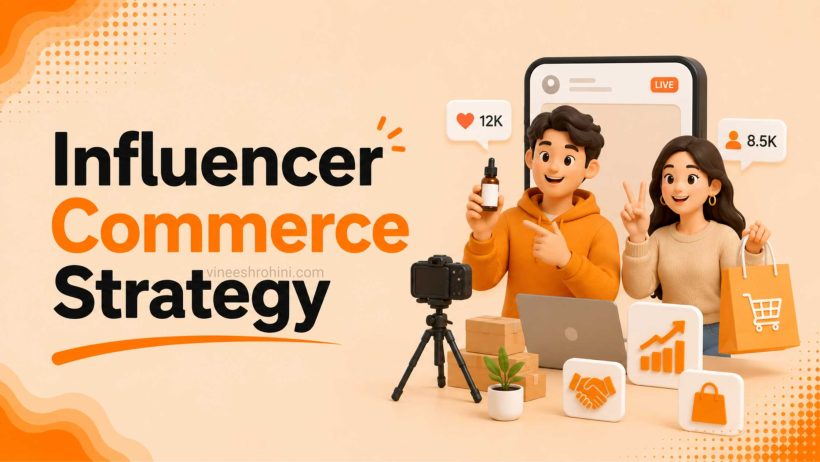
Influencer Commerce Strategy : Comprehensive Guide 2026

Influencer Commerce Strategy : The ecommerce industry has evolved far beyond traditional online advertising. Consumers today are increasingly influenced by creators they trust rather than conventional advertisements. Social media platforms have transformed from networking websites into powerful shopping destinations where product discovery, customer engagement, and purchasing decisions happen simultaneously. As a result, Influencer Commerce has become one of the fastest-growing digital marketing strategies for ecommerce businesses in 2026.
Table of Contents
Influencer Commerce is the integration of influencer marketing with ecommerce, enabling content creators to directly influence product discovery, customer trust, and purchasing decisions through social media, live shopping, affiliate marketing, creator storefronts, product reviews, and personalized recommendations. Instead of interrupting customers with advertisements, influencer commerce allows brands to become part of authentic conversations where products are naturally introduced through educational, entertaining, and relatable content.
Consumers have become increasingly skeptical of traditional advertising. Banner ads, pop-ups, and promotional messages often receive little attention because customers recognize them as paid marketing. Influencer recommendations, however, are perceived as more trustworthy because they come from creators who have built genuine relationships with their audiences over time. Whether reviewing technology products, demonstrating beauty routines, sharing fitness experiences, showcasing fashion trends, or explaining financial tools, influencers often create stronger emotional connections than conventional advertisements.
Artificial Intelligence (AI) has significantly transformed influencer commerce by enabling businesses to identify suitable creators, analyze audience demographics, evaluate engagement quality, predict campaign performance, detect fraudulent followers, automate outreach, personalize campaigns, and measure return on investment. AI-powered influencer marketing platforms help brands make data-driven decisions while maximizing marketing efficiency.
Social commerce has further accelerated this trend. Platforms like Instagram, TikTok, YouTube, Facebook, Pinterest, and other creator-driven ecosystems increasingly allow customers to discover products, watch demonstrations, ask questions, and complete purchases without leaving the platform. Live shopping events, creator storefronts, affiliate links, shoppable videos, and interactive product showcases have created seamless shopping experiences that combine entertainment with ecommerce.
Influencer commerce is also becoming increasingly accessible. Small businesses and startups no longer require celebrity endorsements to compete successfully. Collaborating with micro influencers, nano influencers, industry experts, and niche content creators often delivers higher engagement rates and better conversion rates at significantly lower costs. This democratization has made influencer commerce one of the most cost-effective customer acquisition strategies available to ecommerce businesses.
Long-term creator partnerships are replacing one-time promotional campaigns. Brands increasingly collaborate with influencers as ambassadors who genuinely understand products, educate audiences, and represent company values over extended periods. These ongoing relationships generate higher customer trust and stronger brand loyalty.
This comprehensive guide explores every aspect of Influencer Commerce Strategy in 2026, including Artificial Intelligence, influencer selection, social commerce, affiliate marketing, campaign planning, creator partnerships, performance measurement, common mistakes, and future trends shaping ecommerce marketing.
What Is Influencer Commerce?

Influencer Commerce combines influencer marketing with ecommerce.
Content creators promote products while enabling customers to purchase directly through digital platforms.
Influencer commerce includes:
- Product reviews
- Live shopping
- Affiliate marketing
- Creator storefronts
- Product demonstrations
- Social commerce
The goal is to create seamless shopping experiences that feel natural rather than promotional.
Also Read : Zero Waste Ecommerce Strategy
Authenticity remains central to success.
Why Influencer Commerce Matters
Modern consumers increasingly trust recommendations from creators they follow.
Influencer commerce provides businesses with:
- Greater brand awareness
- Customer trust
- Higher engagement
- Improved conversion rates
- Better return on investment
Unlike traditional advertising, creator recommendations often feel educational and authentic.
Trust influences purchasing behavior.
Authenticity creates competitive advantages.
The Rise of Creator Economy
The creator economy has transformed digital marketing.
Millions of creators produce specialized content in areas such as:
- Technology
- Fashion
- Beauty
- Finance
- Travel
- Health
- Education
Businesses collaborate with creators who already serve target audiences.
Niche expertise strengthens credibility.
Communities become valuable marketing channels.
Understanding Consumer Psychology
Consumers seek trusted opinions before purchasing products.
They value:
- Honest reviews
- Product demonstrations
- Real experiences
- Independent recommendations
Influencers satisfy these needs through relatable content.
Emotional trust often influences purchasing decisions more than advertising.
Also Read : AI Content Marketing for Ecommerce
Authenticity increases customer confidence.
Choosing the Right Influencers
Successful campaigns begin with appropriate creator selection.
Businesses should evaluate:
- Audience relevance
- Engagement quality
- Content consistency
- Brand alignment
- Communication skills
- Professionalism
Follower count should never become the only selection criterion.
Audience quality matters significantly more.
Strategic partnerships produce stronger outcomes.
Artificial Intelligence in Influencer Commerce
Artificial Intelligence has transformed creator marketing.
AI analyzes:
- Audience demographics
- Engagement authenticity
- Brand compatibility
- Historical performance
- Content quality
- Conversion potential
Machine Learning identifies creators likely to generate successful campaigns.
Businesses reduce marketing risks.
Technology improves decision-making.
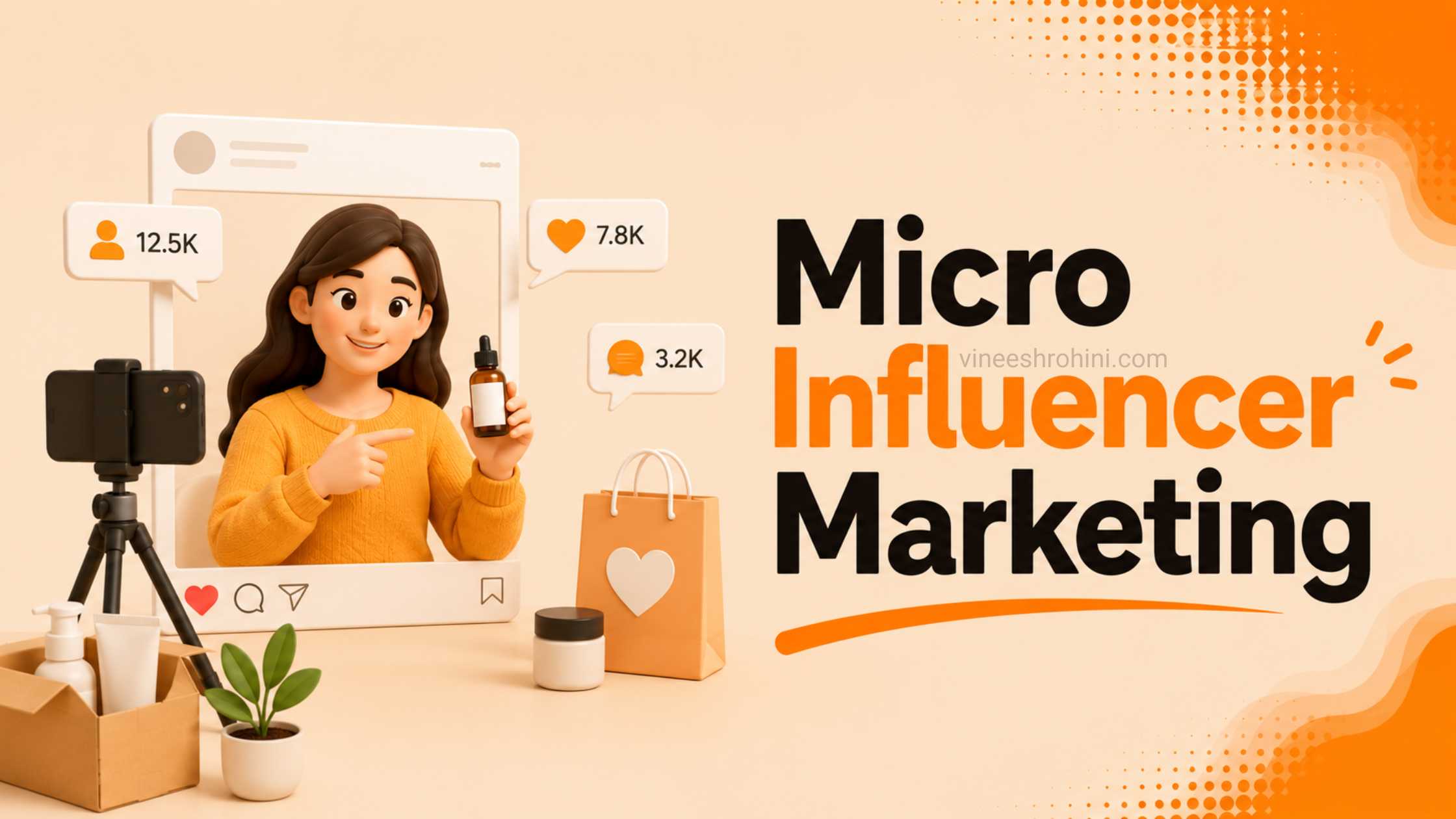
Micro and Nano Influencers
Smaller creators often outperform celebrities.
Micro influencers typically build highly engaged communities.
Nano influencers create even more personal relationships.
Advantages include:
- Better engagement
- Lower costs
- Greater trust
- Niche expertise
Businesses often collaborate with multiple smaller creators.
Community influence drives purchasing decisions.
Building Long-Term Partnerships
Successful influencer commerce emphasizes relationships.
Long-term collaborations provide:
- Consistent messaging
- Authentic product knowledge
- Stronger customer trust
Creators naturally integrate products into ongoing content.
Relationships strengthen brand recognition.
Partnerships outperform one-time promotions.
Social Commerce Integration
Social commerce enables customers to purchase directly through social platforms.
Examples include:
- Shoppable posts
- Product tags
- Creator storefronts
- Live shopping
- Interactive videos
Reduced purchasing friction improves conversion rates.
Convenience increases customer satisfaction.
Social commerce continues expanding.
Live Shopping
Live commerce combines entertainment with real-time selling.
Influencers demonstrate products while answering audience questions.
Benefits include:
- Immediate customer interaction
- Higher engagement
- Real-time purchasing
- Authentic product demonstrations
Live shopping continues gaining popularity globally.
Interactive experiences improve customer confidence.
Affiliate Marketing
Affiliate marketing complements influencer commerce.
Creators earn commissions for successful referrals.
Businesses benefit from:
- Performance-based marketing
- Measurable results
- Lower financial risk
Affiliate partnerships encourage long-term promotion.
Shared success strengthens relationships.
Performance becomes transparent.
User-Generated Content
Customers increasingly trust real experiences.
Influencers encourage audiences to create:
- Reviews
- Testimonials
- Photos
- Videos
- Product demonstrations
User-generated content extends campaign reach.
Community participation strengthens credibility.
Authenticity improves marketing performance.
Video Content Strategy
Video dominates modern ecommerce marketing.
Influencers create:
- Product reviews
- Tutorials
- Comparisons
- Unboxing videos
- Lifestyle content
Visual storytelling enhances product understanding.
Customers make more informed decisions.
Video marketing supports conversions.
Content Collaboration
Businesses should provide creative direction while allowing creator flexibility.
Influencers understand:
- Audience preferences
- Platform trends
- Communication styles
Authentic storytelling performs better than scripted promotions.
Creative freedom increases engagement.
Mutual collaboration produces stronger campaigns.
Measuring Campaign Performance
Businesses should evaluate:
- Reach
- Engagement
- Website traffic
- Sales
- Conversion rates
- Return on Investment (ROI)
Artificial Intelligence automates performance analysis.
Analytics support future optimization.
Data-driven marketing improves profitability.
Budget Planning
Campaign budgets depend on:
- Creator size
- Deliverables
- Platforms
- Campaign duration
- Product category
Businesses should focus on long-term value.
Strategic investment generates stronger returns.
Quality partnerships justify marketing budgets.
Legal and Ethical Considerations

Transparency remains essential.
Sponsored content should be disclosed appropriately.
Businesses should establish written agreements covering:
- Deliverables
- Compensation
- Deadlines
- Content ownership
Professional contracts protect both parties.
Ethical marketing strengthens trust.
Common Mistakes
Businesses should avoid:
- Choosing creators solely by follower count
- Ignoring audience relevance
- Weak campaign objectives
- Over-controlling content
- Poor communication
- Failing to analyze results
Strategic planning improves campaign success.
Continuous learning strengthens performance.
Future Trends
Several innovations will shape influencer commerce.
Artificial Intelligence
Smarter creator selection.
Live Shopping
Expanded global adoption.
Virtual Influencers
AI-generated brand ambassadors.
Hyper-Personalization
Customized shopping experiences.
Community Commerce
Creator-led online communities.
Technology continues transforming digital commerce.
Best Practices
Successful ecommerce businesses should:
- Prioritize authentic creators.
- Build long-term partnerships.
- Leverage Artificial Intelligence.
- Focus on customer trust.
- Encourage creative storytelling.
- Integrate affiliate marketing.
- Measure campaign performance.
- Diversify creator partnerships.
- Support community engagement.
- Continuously optimize campaigns.
Consistency strengthens long-term brand growth.
Influencer Commerce Strategy – Conclusion

Influencer Commerce has become one of the most effective ecommerce growth strategies in 2026, combining the power of creator trust, social commerce, digital storytelling, and seamless online shopping. As consumers increasingly seek authentic recommendations rather than traditional advertising, businesses that build meaningful partnerships with creators gain stronger customer relationships, higher engagement, and improved conversion rates.
Buy Now : News and Magazine Website
Artificial Intelligence has significantly enhanced influencer commerce by simplifying creator discovery, audience analysis, campaign optimization, fraud detection, and performance measurement. AI-powered platforms enable businesses to allocate marketing budgets more effectively while identifying creators whose audiences align closely with brand objectives.
Successful influencer commerce extends beyond one-time product promotions. Long-term creator partnerships, affiliate marketing, live shopping, social commerce integration, educational content, and community engagement all contribute to sustainable customer acquisition and stronger brand loyalty. Businesses that empower creators with creative freedom while maintaining strategic alignment consistently achieve better results than brands relying on scripted advertising.
Consumers increasingly value transparency, authenticity, expertise, and meaningful interactions. Influencers who genuinely understand products and communicate honestly build trust that directly influences purchasing behavior. This trust has become one of the most valuable assets in modern ecommerce marketing.
Looking ahead, technologies such as AI-powered personalization, virtual influencers, immersive live shopping, predictive analytics, creator commerce platforms, and integrated social shopping experiences will continue transforming the ecommerce landscape. Businesses that embrace these innovations while maintaining authentic creator relationships will remain highly competitive.
Ultimately, Influencer Commerce is more than a marketing channel—it is a customer relationship strategy that combines community, trust, education, and commerce into a seamless digital experience. Ecommerce brands that invest in authentic creator partnerships and data-driven marketing strategies will be well positioned to increase sales, strengthen brand awareness, and achieve sustainable growth throughout 2026 and beyond.
Keywords : Influencer Commerce Strategy – Influencer Commerce Strategy 2026