

Ecommerce Demand Forecasting : Comprehensive Guide 2026

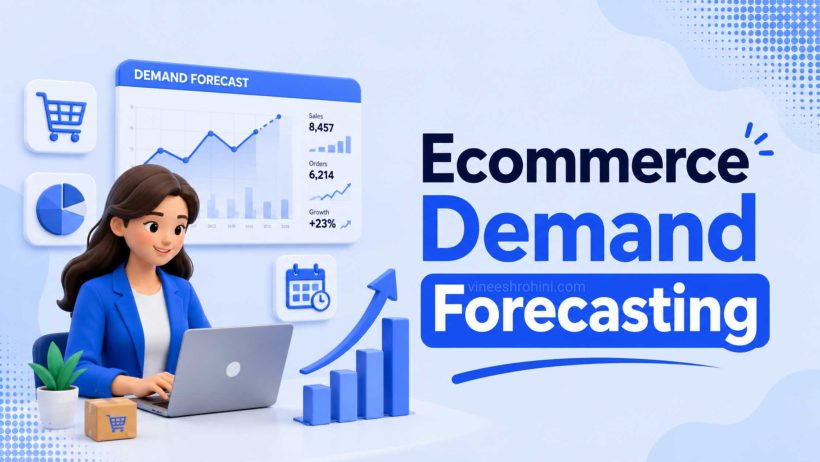
Ecommerce Demand Forecasting : In today’s highly competitive ecommerce landscape, success is no longer determined solely by product quality or marketing campaigns. Businesses must also anticipate customer demand accurately to ensure products are available when customers need them without tying up excessive capital in unsold inventory. This ability to predict future customer demand is known as Ecommerce Demand Forecasting, and it has become one of the most important business strategies for online retailers in 2026.
Table of Contents
Demand forecasting is the process of estimating future product sales using historical sales data, market trends, customer behavior, seasonal patterns, economic conditions, promotional activities, and emerging technologies such as Artificial Intelligence (AI) and Machine Learning (ML). Accurate forecasting enables ecommerce businesses to make informed decisions about inventory purchasing, warehouse planning, staffing, production schedules, marketing budgets, pricing strategies, and supplier relationships.
The rapid growth of ecommerce has increased both opportunities and challenges. Online stores often sell thousands of products across multiple channels, including websites, marketplaces, social commerce platforms, mobile apps, and international markets. Managing inventory manually is no longer practical. Overstocking results in higher storage costs, increased waste, and reduced cash flow, while understocking causes lost sales, disappointed customers, and damage to brand reputation. Demand forecasting helps businesses strike the right balance between product availability and operational efficiency.
Artificial Intelligence has transformed demand forecasting by analyzing enormous amounts of structured and unstructured data. AI-powered forecasting systems evaluate customer browsing patterns, purchasing behavior, website traffic, weather conditions, holidays, competitor activities, economic indicators, social media trends, and search engine data to generate highly accurate sales predictions. Unlike traditional forecasting methods that rely primarily on historical data, AI continuously learns from changing market conditions and adapts predictions in real time.
Consumer expectations have also evolved. Modern shoppers expect products to be available immediately, especially during major shopping seasons, product launches, and promotional events. Businesses unable to meet demand risk losing customers to competitors. Accurate forecasting improves customer satisfaction by ensuring products remain available when demand increases.
Demand forecasting also supports financial planning. Businesses can allocate budgets more effectively, negotiate better supplier contracts, optimize warehouse utilization, reduce emergency shipping costs, and improve overall profitability. Investors and financial institutions also value companies with strong forecasting capabilities because predictable operations reduce business risk.
As ecommerce continues expanding globally, forecasting becomes increasingly complex due to international markets, multiple currencies, regional demand differences, and cross-border logistics. AI-driven forecasting tools simplify these complexities by providing real-time visibility into customer demand across different regions and sales channels.
This comprehensive guide explores every aspect of Ecommerce Demand Forecasting in 2026, including forecasting methods, Artificial Intelligence, inventory planning, sales prediction, marketing integration, supplier collaboration, common challenges, future trends, and best practices that help businesses make smarter, data-driven decisions.
What Is Ecommerce Demand Forecasting?

Ecommerce Demand Forecasting is the process of predicting future customer demand for products using historical data, market analysis, and advanced technologies.
The objective is to estimate:
- Future sales
- Inventory requirements
- Purchasing schedules
- Production needs
- Warehouse capacity
Forecasting helps businesses prepare before customer demand changes.
Also Read : AI Content Marketing for Ecommerce
Accurate predictions improve operational efficiency.
Planning supports sustainable growth.
Why Demand Forecasting Matters
Customer demand constantly changes.
Influencing factors include:
- Seasonal trends
- Consumer preferences
- Economic conditions
- Marketing campaigns
- Product launches
- Competitor activities
Businesses without forecasting often experience:
- Stock shortages
- Excess inventory
- Lost sales
- Higher operating costs
Demand forecasting reduces uncertainty.
Better planning improves profitability.
Benefits of Accurate Forecasting
Successful forecasting provides multiple advantages.
Businesses achieve:
- Better inventory control
- Improved customer satisfaction
- Lower storage costs
- Stronger supplier relationships
- Reduced waste
- Better financial planning
Prepared businesses respond faster to changing markets.
Forecasting strengthens competitive advantage.
Historical Sales Analysis
Historical sales data provides the foundation for forecasting.
Businesses should analyze:
- Previous sales
- Seasonal performance
- Product popularity
- Customer purchasing behavior
Historical patterns reveal valuable trends.
Past performance helps estimate future demand.
However, history should not be the only forecasting factor.
Artificial Intelligence in Demand Forecasting
Artificial Intelligence has revolutionized forecasting.
AI analyzes:
- Customer behavior
- Website traffic
- Search trends
- Market conditions
- Weather
- Economic indicators
Machine Learning continuously improves prediction accuracy.
AI identifies patterns impossible to detect manually.
Technology enhances decision-making.
Customer Behavior Analysis
Customers leave valuable digital signals.
Businesses should monitor:
- Product views
- Shopping cart activity
- Purchase frequency
- Search queries
- Wishlist additions
Artificial Intelligence converts behavioral data into demand predictions.
Understanding customer intent improves forecasting accuracy.
Behavioral insights support inventory planning.
Seasonal Demand Forecasting
Many products experience predictable seasonal demand.
Examples include:
- Holiday shopping
- School supplies
- Summer products
- Winter clothing
- Festival promotions
Businesses should prepare inventory before demand increases.
Seasonal forecasting prevents stock shortages.
Planning improves customer satisfaction.
Product Lifecycle Forecasting
Every product moves through different stages.
These include:
- Introduction
- Growth
- Maturity
- Decline
Forecasting helps businesses manage each phase effectively.
Inventory strategies should evolve with product lifecycle.
Businesses avoid unnecessary stock accumulation.
Market Trend Analysis
Industry trends influence future demand.
Businesses should monitor:
- Consumer preferences
- Technology developments
- Fashion trends
- Economic conditions
Artificial Intelligence identifies emerging trends early.
Businesses respond before competitors.
Market awareness supports growth.
Inventory Planning
Demand forecasting directly influences inventory management.
Businesses determine:
- Purchase quantities
- Safety stock
- Reorder points
- Warehouse allocation
Balanced inventory improves cash flow.
Stock availability increases customer satisfaction.
Efficient inventory reduces operational costs.
Supplier Collaboration
Forecasting benefits supplier relationships.
Businesses share:
- Sales projections
- Purchasing schedules
- Seasonal expectations
Suppliers prepare production accordingly.
Better communication improves supply chain reliability.
Long-term partnerships strengthen business stability.
Marketing Integration
Marketing activities influence customer demand.
Forecasting should consider:
- Advertising campaigns
- Discounts
- Product launches
- Influencer collaborations
Marketing and inventory teams should collaborate closely.
Coordinated planning prevents unexpected shortages.
Integrated strategies improve campaign success.
Pricing and Demand
Pricing directly affects purchasing behavior.
Artificial Intelligence analyzes:
- Customer sensitivity
- Competitor pricing
- Market demand
Businesses optimize prices without reducing profitability.
Dynamic pricing supports inventory management.
Pricing strategies influence sales volume.
Multi-Channel Forecasting

Modern ecommerce operates across multiple platforms.
Businesses sell through:
- Websites
- Online marketplaces
- Mobile apps
- Social commerce
- Physical stores
Forecasting should combine data from every channel.
Integrated analysis improves prediction accuracy.
Omnichannel visibility strengthens planning.
Financial Planning
Forecasting supports financial management.
Businesses estimate:
- Revenue
- Cash flow
- Inventory investment
- Marketing budgets
Financial planning becomes more predictable.
Investment decisions improve.
Forecasting reduces business uncertainty.
Warehouse Management
Warehouse operations depend on accurate demand predictions.
Businesses optimize:
- Storage space
- Picking operations
- Workforce scheduling
- Inventory placement
Better forecasting improves warehouse efficiency.
Operations become more organized.
Costs decrease.
Common Forecasting Challenges
Businesses often encounter:
- Incomplete data
- Rapid market changes
- New product launches
- Economic uncertainty
- Consumer behavior shifts
Artificial Intelligence reduces many forecasting challenges.
Continuous monitoring improves accuracy.
Flexibility supports better decision-making.
Common Mistakes
Businesses should avoid:
- Relying only on historical data
- Ignoring market trends
- Weak supplier communication
- Poor data quality
- Overestimating demand
Forecasting requires continuous improvement.
Balanced analysis produces better predictions.
Human expertise remains valuable.
Future Trends
Several technologies will shape forecasting.
Artificial Intelligence
Greater prediction accuracy.
Predictive Analytics
Real-time forecasting.
Internet of Things (IoT)
Live inventory visibility.
Big Data
Broader market intelligence.
Autonomous Supply Chains
Self-optimizing inventory systems.
Innovation continues improving forecasting capabilities.
Best Practices
Successful ecommerce businesses should:
- Leverage Artificial Intelligence.
- Analyze customer behavior.
- Monitor market trends.
- Integrate marketing and forecasting.
- Collaborate with suppliers.
- Maintain high-quality data.
- Review forecasts regularly.
- Optimize inventory continuously.
- Measure forecasting accuracy.
- Adapt quickly to market changes.
Demand forecasting should become an ongoing business process.
Ecommerce Demand Forecasting – Conclusion

Ecommerce Demand Forecasting has become one of the most valuable strategic capabilities for online businesses in 2026. As customer expectations rise and global ecommerce continues expanding, businesses must accurately predict future demand to maintain product availability, optimize inventory investments, improve customer satisfaction, and strengthen profitability. Effective forecasting reduces uncertainty while enabling proactive business decisions across every department.
Buy Now : Ecommerce Website
Artificial Intelligence has fundamentally transformed demand forecasting by combining historical sales data with customer behavior, market trends, economic conditions, weather patterns, promotional activities, and real-time analytics. AI-powered forecasting systems continuously learn from changing business conditions, allowing companies to respond quickly to emerging opportunities and potential risks.
Successful forecasting extends beyond inventory management. It influences supplier collaboration, warehouse operations, marketing campaigns, financial planning, pricing strategies, staffing decisions, and customer experience. Organizations that integrate forecasting across all business functions gain stronger operational efficiency and competitive advantages compared to businesses relying on manual estimates or historical assumptions alone.
Businesses should also recognize that forecasting is not about achieving perfect predictions. Instead, it is about continuously improving decision-making by combining accurate data, intelligent technology, market awareness, and human expertise. Regular monitoring, data quality, supplier collaboration, and flexible planning remain essential components of successful forecasting strategies.
Looking ahead, emerging technologies such as predictive analytics, Internet of Things (IoT), autonomous supply chains, real-time inventory intelligence, advanced machine learning, and AI-driven decision support will continue reshaping ecommerce forecasting. Businesses adopting these innovations early will improve responsiveness, reduce operational costs, and better serve evolving customer expectations.
Ultimately, Ecommerce Demand Forecasting is far more than a statistical exercise—it is a strategic business discipline that enables companies to anticipate market needs, optimize resources, minimize risk, and achieve sustainable long-term growth. Ecommerce businesses that invest in intelligent forecasting today will be well positioned to thrive in the increasingly competitive digital economy throughout 2026 and beyond.